
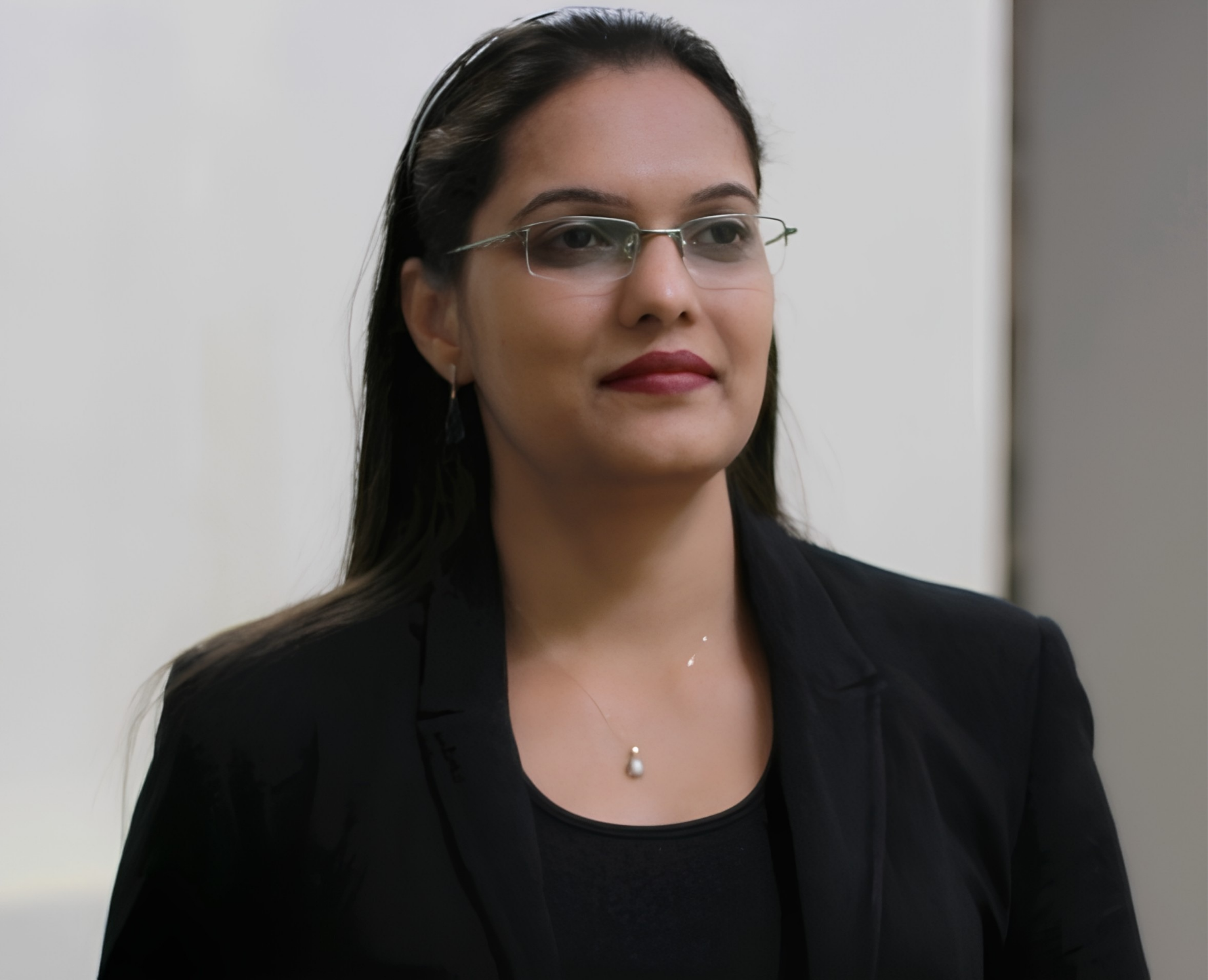
Dr. Pradnya Surana
Positive Psychologist & Financial Well-being Researcher
Had Money Questions Nobody Was Answering
So I found my own answers — through a PhD, a decade of research, and living the experiment myself.
The origin story
A life that shaped the work
Two lessons, one home
I grew up in Aurangabad, India, in a family where money was a natural part of conversation. My community was entrepreneurial at heart — business, investments, and building something of your own were things people took pride in. There was an energy around ambition that I genuinely absorbed.
But at home, my parents were quietly modelling something else alongside that ambition. My father, a doctor, kept one free consultation day every week and covered his patients' medicines from his own pocket. My mother encouraged us as kids to donate our birthday money to orphanages. Their message was simple: relationships matter more than money. Giving matters more than accumulating.
I carried both of these influences with me — the drive to build, and the value of generosity — and for a long time, I didn't fully understand either.
Early
Earning well, yet oddly stressed
By 21, I had saved enough to start my own business. I was earning well, ticking boxes, moving forward. But I was also oddly stressed. Not because I didn't have enough — I did. I just couldn't stop chasing more, without really knowing why. I was on a treadmill I had put myself on.
21
The real experiment began
That restlessness sent me searching. I started asking questions I couldn't find easy answers to — why does money stress us even when we have enough? Why do some people feel free with very little, while others feel trapped with plenty?
Those questions eventually led me to a PhD at the University of East London, where I got a rare chance to study money — not as economics or finance, but as psychology. As meaning. As something deeply personal.
What I didn't expect was that life would put me through my own experiment. I went from independent businesswoman to international student almost overnight — working part-time jobs to cover rent and tuition, legally capped at 20 hours a week. For the first time, I genuinely felt the weight of not having enough. It was uncomfortable — and also deeply clarifying.
PHD
"Why do some people feel free with very little, while others feel trapped with plenty?"
The real experiment began
What shifted wasn't my bank balance. It was my relationship with money itself — the anxiety, the comparison, the constant "not quite enough" feeling that had been running quietly in the background my whole life.
I've spent over a decade since then researching, reading, and working with people on exactly this. This work comes from that journey — not just academic knowledge, but real, lived experience of figuring it out.
I'm still figuring it out. And I'd love for you to join me.
And
Who I Am
Positive Psychologist & Financial Well-being Researcher
My work sits at the intersection of psychology, culture, spirituality, and economics — exploring one of the most universal human experiences: our relationship with money.
Over the years, my work has connected me with individuals and organisations from more than 40 countries across five continents. From one-to-one coaching to international consultancy and academic research, the same core belief drives everything — that with the right understanding, anyone can build a healthier, more peaceful relationship with money.
What I Do
My approach goes beyond conventional financial advice. Drawing on positive psychology, behavioural economics, and cross-cultural research, the focus is always on the deeper question — not just what people do with money, but why they feel the way they do about it.
This work has taken shape through coaching, workshops, academic teaching, consultancy, and writing — reaching audiences across the UK, India, the USA, Canada, the UAE, Japan, Saudi Arabia, and Australia.
My work has been featured in prominent publications including The Daily Telegraph, The Psychologist, Psyche (Aeon Publications), PENN MAPP Alumni, the Indian Journal of Positive Psychology and numerous podcasts
My Approach
My approach goes beyond conventional financial advice. Drawing on positive psychology, behavioural economics, and cross-cultural research — the focus is always on the deeper question.
Positive Psychology
Understanding what helps people flourish — not just function — and applying that directly to how we think, feel, and behave around money.
Behavioural Economics
The science of why we make the financial choices we do, even when we know better. The gap between knowing and doing is where the real work happens.
Cross-Cultural Research
Money means different things across cultures. Understanding those differences — and what they have in common — changes everything about how we approach financial wellbeing.
Global Reach — 75+ Countries, 5 Continents
From one-to-one coaching to international consultancy and academic research, the same core belief drives everything — that with the right understanding, anyone can build a healthier, more peaceful relationship with money.
United Kingdom
🇮🇳 India
🇺🇸 USA
🇨🇦 Canada
🇦🇪 UAE
🇯🇵 Japan
🇸🇦 Saudi Arabia
🇦🇺 Australia
+ 67 more countries
My Book
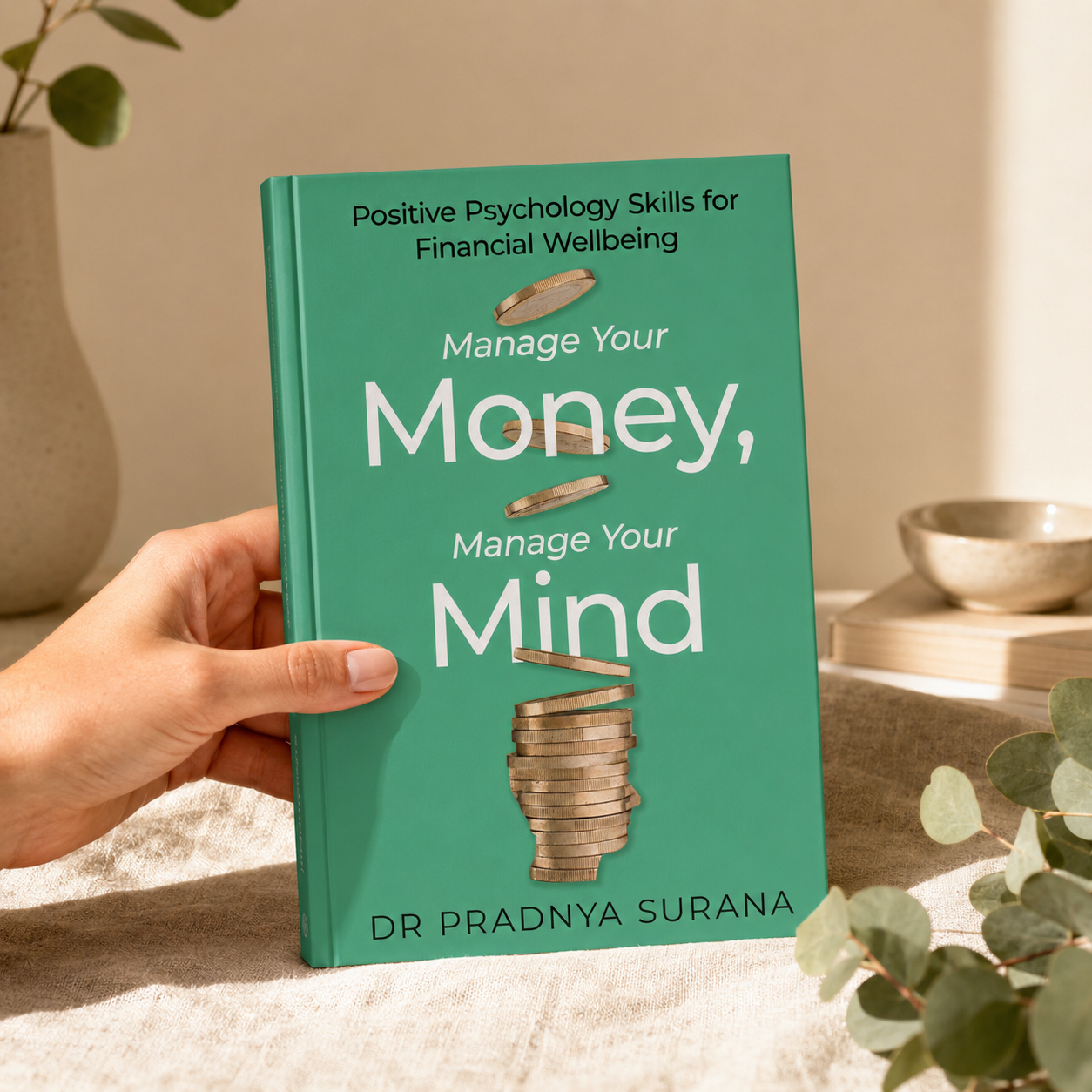
Manage Your Money,
Manage Your Mind
Manage Your Money, Manage Your Mind is the culmination of over a decade of research, lived experience, and work with people navigating real money challenges. Since publication, it has been read by people all over the world.
Academic Background
Grounded in rigorous research.
The academic journey behind this work has been just as important as the practical one.
I've spent over a decade researching, reading, and working with people on exactly this.
This work comes from that journey — not just academic knowledge, but real, lived experience of figuring it out.